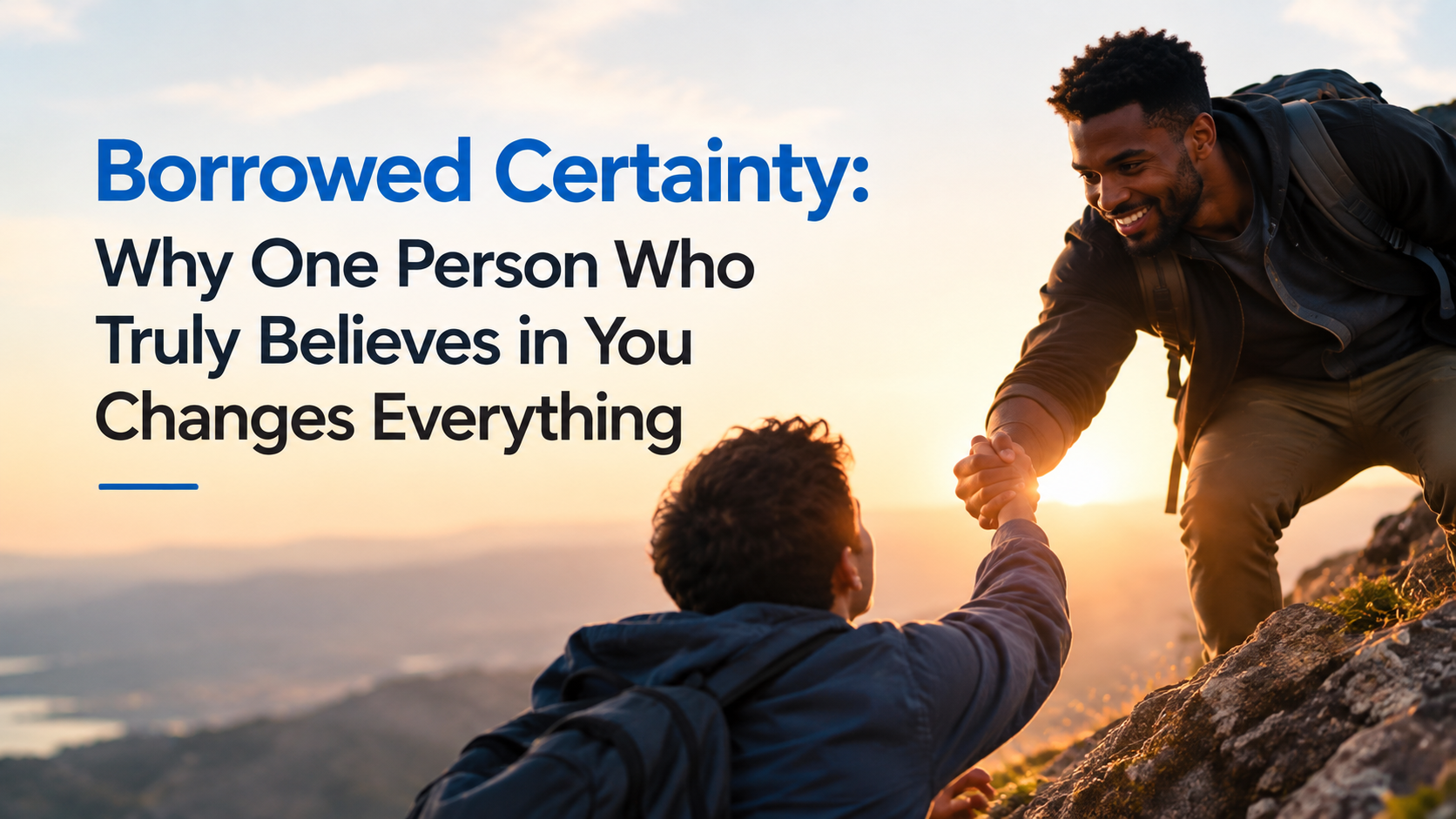
Borrowed Certainty: Every world-changing idea once had zero proof. What carried it forward wasn’t confidence. It was one person.
Before there was a ministry, a movement, or a name whispered across two thousand years, there was a teenage girl who received an impossible message. Mary is told she will conceive a child without a man — not through marriage, not through biology as anyone understood it, but through something else entirely. She has no way to prove this to anyone. On the face of it, the message is insane.
So she does the only thing a person can do with an insight that has no evidence yet. She tells one person.
Mary goes to her relative Elizabeth. And here is the detail that deserves our attention: Elizabeth does not ask how. She does not ask for a sign. She does not counsel patience or caution. She says, in effect, “Blessed is she who believed.” She treats the promise as already true, while there is still nothing visible to confirm it.
Elizabeth lends Mary certainty. Borrowed certainty. For a while, that borrowed belief is the only proof Mary has.
This is the part we skip when we tell ourselves stories about success. We’ve built a myth of the solitary genius — the founder with unshakable self-belief, the visionary who just knew. But nearly every breakthrough passes through a fragile window where the only evidence is a feeling, and a feeling is not enough to stand on. What carries an idea through that window is usually one person who believes in you before you have anything to show for it.
Why this matters through all four dimensions of you
In 4D Leadership, we talk about identity and purpose operating across four dimensions — Spiritual, Mental, Emotional, and Physical. Borrowed certainty touches every one of them:
Identity is the engine of destiny — but identity rarely announces itself in isolation. It’s spoken over to you first, by someone who sees before you can see.
Support is not the same as belief
We confuse the two all the time.
A supporter says, “I will help you.” They offer time, money, connections, labor. A believer says something earlier and stronger: “I already see it.” Support is about resources. Belief is about reality. When someone truly believes in you, they are not promising to assist your effort — they are confirming that the thing you see is in fact possible.
That distinction matters because of how doubt and belief spread. Doubt is contagious — show an unproven idea to a room of skeptics and watch how fast it shrivels. Belief is contagious too, and it works through the same mechanism. The first person you tell sets the emotional weather. If they believe, you borrow enough of it to keep going. If they waver, a wet blanket lands on the whole thing before it has a chance to catch.
Mary did not take her message to a committee. She took it to one person who would treat it as real.
Three people who prove the pattern
The story repeats everywhere, once you look for it.
Twelve publishers turned down J.K. Rowling before Bloomsbury said yes. But the decision didn’t come from a committee’s confidence in a sure thing — it came, famously, from editor Barry Cunningham handing the first chapter to his eight-year-old daughter, who read it and immediately wanted more. One person believed, then a second, and a chain reaction started.
Walt Disney had already lost everything once. His first studio went bankrupt. He arrived in California with little more than an idea about a cartoon mouse and a talent for dreaming. His older brother Roy was the steady one, and Roy believed in Walt’s vision so completely that he staked his own savings on it and spent his life making sure the dream had money and structure. Walt dreamed. Roy believed. Neither mattered without the other.
And before Apple was Apple, it was two men in a garage with a homemade computer. Mike Markkula was already retired and wealthy in his early thirties. He looked at what Steve Jobs and Steve Wozniak had built and believed so fully that he wrote the business plan himself, invested his own money, and lent the project a credibility it had no right to claim yet.
None of these believers had hard evidence. They had a person they trusted, a vision they could suddenly see, and a decision to act as if it were real.
Where to find your own believer
Notice something in the original story that’s easy to miss. When Mary arrived, Elizabeth was already carrying her own impossible thing — old, past child-bearing age, and pregnant anyway. Her belief in Mary came from memory. She had survived her own unlikelihood, so she no longer needed the world’s permission to believe that unlikely things happen.
That’s the clue for finding your own. Don’t look for the loudest cheerleader — enthusiasm is cheap and evaporates the moment things get hard. Look for the person who has already walked through their own impossible season and come out the other side still believing that improbable things happen. That person won’t ask you for proof. They’ll ask how they can help and mean it.
And here’s the part we usually leave out: you have to become this person for someone else. Borrowed certainty runs on repayment — not because anyone keeps a ledger, but because no one knows better than you what it means to be believed once. Pass it on.
The ending we forget
We remember Mary and Elizabeth as a sweet greeting scene. We miss what it was: a private message, met by one believing person, that became a public reality which outlasted empires. A girl told one person. That person said yes. Everything after flows from that moment.
So the next time you carry an idea that sounds insane, resist the urge to shop it around for a consensus. Don’t look for a crowd. Look for one person. Tell them first. Their belief may be the only evidence you have for a while.
And for a while, that is enough.
Blessings!
We don’t spam! Read our privacy policy for more info.
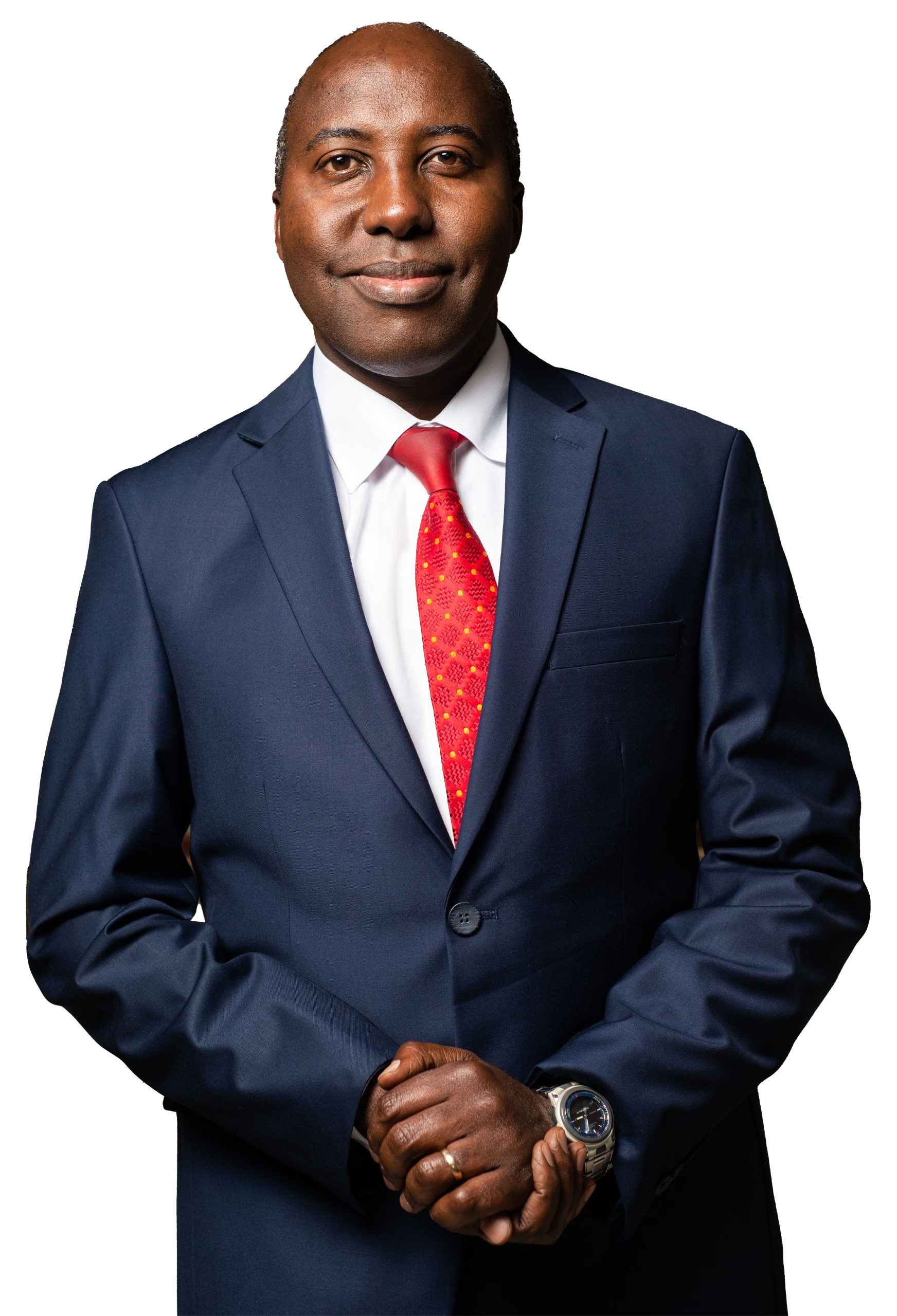
I’m passionate about helping people discover who they are—and why they exist. Through my signature framework, the Discovery Class, I guide individ..
We don’t spam! Read our privacy policy for more info.
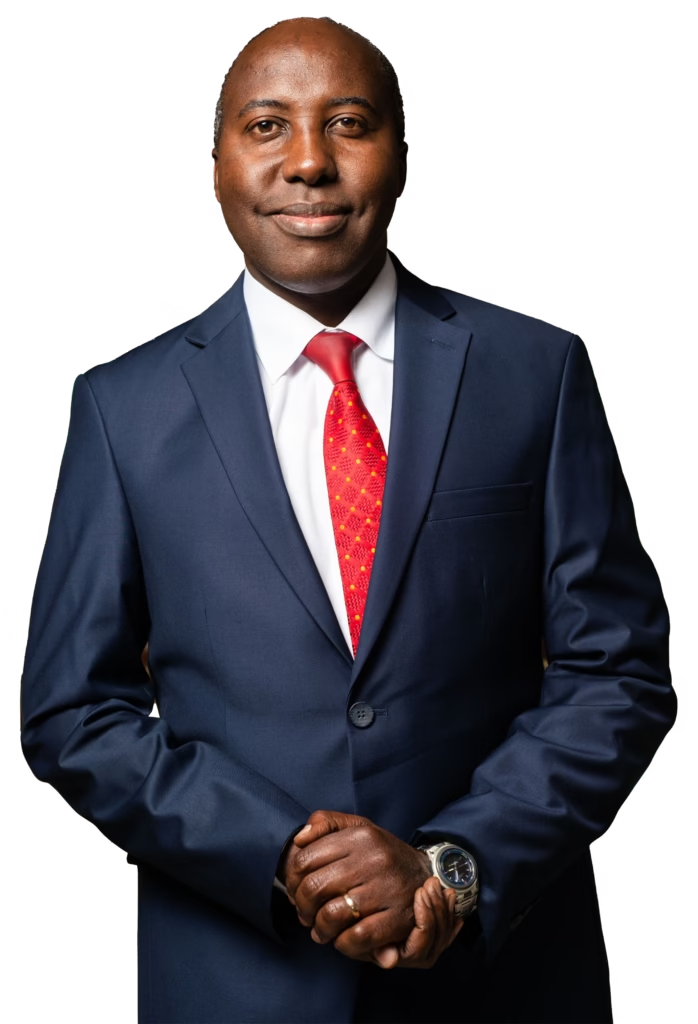
I’m passionate about helping people discover who they are—and why they exist. Through my signature framework, the Discovery Class, I guide individuals on a transformative journey across the four dimensions of life: mental, emotional, Physical, Spiritual (MEPS).I believe true growth is holistic…
We don’t spam! Read our privacy policy for more info.
Related blog
Borrowed Certainty: Every world-changing idea once had zero proof. What...
There is a difference between existing and living with purpose....
Most people desire a better life yet remain trapped in...